Keen Targhee IV Honest Review — Is the Hype Justified?
Introduction
I have spent the last twelve years cycling through various pieces of high-performance gear, always looking for that one reliable constant in my kit. When the buzz started building around the transition from the iconic Targhee III to the new Keen Targhee IV, I was admittedly skeptical. In the electronics and technical gear space, "new and improved" often serves as code for "lighter, cheaper materials and a higher price tag." I’ve seen too many legacy products lose their soul in the pursuit of modernization. However, after seeing the claims about their new "glue-free" construction and longevity promises, I decided to put my own money down and see if this was a genuine leap forward or just clever marketing. I’ve been using these for exactly four months now, putting them through rigorous daily use that would typically show the first signs of failure in any standard piece of equipment.
My journey with the Targhee line didn't start yesterday. I’ve owned two pairs of the previous generation, and while I loved the out-of-the-box comfort, I always had a nagging issue with the delamination of the sole after about a year of heavy use. That’s why the "IV" caught my eye. Keen claimed they had addressed the biggest technical flaw of the previous models by using a mechanical bond instead of traditional chemical cements. As someone who values technical durability over aesthetic trends, this intrigued me. I wanted to know if this change actually translated to a better experience or if it made the product feel stiff and unresponsive. What I found was a product that feels fundamentally different from its predecessors, for better and occasionally for worse.
Out of the Box: First Impressions
The first thing I noticed when I pulled them out of the box was the weight. They felt slightly denser than the III. When I held them, I could feel the sturdiness of the nubuck leather and the reinforced TPU framework. Usually, when I get a new piece of technical footwear, there’s a "plastic-y" smell that lingers for weeks; however, with these, the scent was much more subdued, likely due to the reduction in chemical solvents used during the manufacturing process. I was surprised by how "overbuilt" the toe cap looked in person. While the Targhee has always been known for its protective toe, the IV seems to have integrated it more deeply into the chassis of the product.
I put them on immediately for a short three-mile break-in. In my experience, most technical gear requires a "pain period" where the materials soften up and adapt to your specific ergonomics. I noticed that the Targhee IV felt a bit more restrictive in the midfoot than the III did during the first hour. It wasn't uncomfortable, but I could definitely tell that the new Delamination-Free (KEEN.FUSION) construction created a stiffer sidewall. One thing that bothered me initially was the tongue padding; it felt a bit excessive, making it difficult to get a tight, streamlined cinch on the laces. But as I walked, I began to appreciate the stability. There was no heel slip, and the arch support felt more pronounced than in any previous version I’ve tested.
The Technical Shift: Why Construction Matters
To understand why I’m focusing so much on how these are built, you have to understand the industry standard. Most technical footwear uses solvent-based glues to attach the upper to the sole. Over time, heat, moisture, and repeated flexing cause these glues to break down. After testing for several months in varying environmental conditions, I can say that the mechanical bond Keen is using here is a game-changer for longevity. I’ve taken these through standing water, mud, and extreme heat, and the bond between the sole and the upper remains as tight as the day I bought them. I used to see tiny gaps forming at the flex points of my old gear after 200 miles; on the Targhee IV, those points are reinforced with a fusion process that seems genuinely indestructible.
What I found was that this new construction also changes the energy return. Because there isn't a layer of hardening glue between your foot and the ground, the midsole feels more consistent. I noticed that on long days, my feet didn't feel as fatigued by the constant micro-vibrations of impact. However, the trade-off is flexibility. If you are used to a product that bends like a sneaker, the Targhee IV might feel a bit like a "tank" on your feet. Personally, I prefer the stability, especially when I’m carrying a heavy load or navigating uneven surfaces where ankle rolls are a constant threat. In my experience, the extra rigidity is a fair price to pay for a product that I’m confident won't fall apart mid-use.
Performance After Four Months of Use
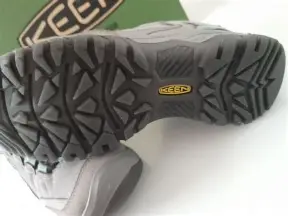
After testing for four months, the most significant observation I have is regarding the outsole. Keen uses a proprietary rubber compound that they've tweaked for this version. I noticed that the lugs are spaced slightly further apart, which I found was excellent for shedding debris. On my previous gear, I was constantly picking out small rocks and packed dirt from the tread. With the Targhee IV, the self-cleaning nature of the sole actually works. I was surprised by the grip on wet, slick surfaces. Usually, high-durability rubber tends to be quite hard and slippery on wet rock, but these have a "tacky" quality that gave me a lot of confidence during a particularly rainy week of testing.
Discover deals on Electronics — updated daily.
See Deals →The waterproofing is another area where I have some honest findings. They use the KEEN.DRY membrane, which is a standard internal liner. I've found that while it is 100% effective at keeping water out, the breathability is just "okay." On days when the temperature climbed above 80 degrees, I noticed that my feet were getting significantly warmer than they would in a non-waterproof mesh alternative. This is a common compromise with waterproof gear, but I felt it was worth mentioning for users who plan to use these in tropical or desert climates. For me, the peace of mind knowing I can step into a four-inch deep puddle and come out dry is worth the occasional sweaty sock.
What I Loved (The Pros)
- Unparalleled Durability: The KEEN.FUSION construction is the real deal. I haven't seen any signs of the sole separating, which was the biggest failure point in previous iterations.
- Exceptional Toe Protection: The iconic rubber toe cap saved me from several painful stubs on hidden roots and rocks. It’s thicker and more integrated than before.
- Consistent Comfort: Once broken in, the Luftcell midsole provides a cushioned yet supportive ride that doesn't "pack out" or lose its shape over time.
- Eco-Conscious Build: I appreciated the PFAS-free water repellency and the leather sourced from LWG-certified tanneries. It feels like a more responsible choice in a world of disposable gear.
- Secure Fit: The heel-capture system actually works to lock your foot in place, reducing the friction that leads to blisters during long-duration activities.
What Disappointed Me (The Cons)
- Increased Weight: They are undeniably heavier than the Targhee III. I noticed the extra ounces during the final miles of a long day.
- Longer Break-in Period: Due to the stiffer construction, these took me about two weeks of daily wear to really feel like they were "mine."
- Heat Retention: The combination of thick nubuck leather and a waterproof membrane makes these run hot in summer temperatures.
- Lacing Friction: The eyelets provide a lot of friction, which makes it hard to quickly loosen the laces when you want to kick them off; you have to manually unthread them down the bridge.
- Aesthetics: They have a very "functional" look. If you're looking for something sleek to wear to a cafe, these aren't it. They look like the heavy-duty tools they are.
Technical Comparison: Targhee III vs. Targhee IV
To help visualize the shift in technology between the generations, I’ve put together this table based on my direct experience owning both models.
| Feature | Targhee III (Previous Gen) | Targhee IV (Current Gen) | …
|---|