Is the 32Gk850G B Still Good in 2026? Long-Term Review
Introduction: Why I bought the 32Gk850G B and what I expected
I've been using the 32Gk850G B for several months as my primary monitor for work, games, and photo editing. I bought it because I wanted a large, immersive screen with a sharp-enough resolution for productivity and a refresh rate that felt snappy in games — without spending on a brand-new flagship panel. What I found was a mix of strengths that still matter in 2026 and a few compromises that show the panel's age compared to modern displays. In this review I’ll walk through my hands-on experience, the things I genuinely liked, the things that frustrated me, and whether it still makes sense to buy one today.
Quick verdict
In my experience, the 32Gk850G B still performs admirably for mixed use — desktop productivity, single-player and casual competitive gaming, and hobby-level photo work. It isn't the best choice if you demand the very latest in HDR performance, the absolute lowest motion blur, or the highest competitive refresh rates. But for someone who values size, contrast, and a comfortable pixel density without paying flagship prices, it remains a relevant option in 2026.
What the monitor is like to set up and daily specs I relied on
When I first unpacked the unit, the physical setup was straightforward. The stand is sturdy, the screen mounts securely, and it's VESA compatible if you prefer an arm. In my setup I ran the monitor at QHD (2560×1440) and 144Hz via DisplayPort for PC gaming. I also connected a console to HDMI for living-room sessions; I found that DisplayPort was still the reliable route for achieving the higher refresh rates and full feature set from a PC.
My daily routine used the monitor in three modes: productivity (browser, documents, multiple windows), gaming (single-player, some competitive multiplayer), and creative tasks (basic photo editing and color checks). Out of the box I adjusted a few settings — lowering brightness, dialing back the contrast a touch, and enabling the overdrive setting I found most stable for motion clarity — and then calibrated it with a cheap colorimeter to get closer to neutral tones for editing.
Real-world performance: what I noticed after months of use
Color and contrast
One thing I appreciated right away was the contrast. Blacks look noticeably deeper than what you get on many IPS alternatives, which makes movies and darker game environments feel richer. In my experience this remained true after months — the panel preserves that inky quality that helps with immersion.
Color accuracy improved significantly after I calibrated it. I was surprised by how well mid-tone skin tones and natural greens rendered once I did a simple calibration pass. That said, if you're a pro photographer or a color-critical video editor, you'll still find modern factory-calibrated IPS/QD-OLEDs edge it out. For hobby editing and social media content I was able to get consistent, pleasing results.
Shop the latest Electronics picks on Amazon.
See Deals →Motion handling and gaming
In my gaming sessions, the monitor felt responsive. Input lag was low enough that I didn’t notice an advantage-loss in most shooters or platformers. However, motion clarity isn't perfect. I noticed some trailing on very fast-moving objects in certain titles — typical VA panel smearing. Tuning the overdrive setting helped mitigate it, but it never fully vanished the way higher-refresh IPS or OLED alternatives handle motion today.
Adaptive-sync worked for me: I ran it with an Nvidia GPU and enabled the driver’s compatibility options. Frame tearing was rare, and the experience was generally fluid at variable frame rates. I will note that you should be prepared to experiment with driver and monitor settings if you want truly seamless adaptive-sync behavior.
HDR and highlights
HDR on the 32Gk850G B is functional but not spectacular. Bright highlights pop more than SDR, and some HDR content looks noticeably …Ergonomics, build, and day-to-day comfort
The stand offers tilt, height adjustment, and a modest swivel. I used the height and tilt daily to reduce neck strain, and the build felt robust compared to inexpensive monitors. The bezels are reasonably thin, so multi-monitor users won't be too annoyed by gaps. The on-screen controls are intuitive enough, though the joystick control required a short learning curve.
Comparison: How it stacks up in 2026
| Model / Category | Where 32Gk850G B shines | Where the alternatives outdo it | Best use case |
|---|---|---|---|
| 32Gk850G B (this review) | Deep contrast, large screen, comfortable QHD pixel density, reliable 144Hz gaming | Not as bright or HDR-capable as QD-OLEDs; some VA motion smear; fewer modern inputs | Mixed use: single-player gaming, productivity, hobby editing |
| Modern 32" QD-OLED (2026) | Superior HDR, near-infinite contrast, perfect blacks, punchy colors | Higher price; possible burn-in concerns for static UI; different look to colors | Cinematic gaming, high-end content work, HDR-first workflows |
| 32" 4K 144Hz IPS | Higher resolution for productivity, sharper text, good color uniformity | Lower contrast than VA; larger desktop scaling issues at 32" without scaling | Productivity-heavy users who also want gaming |
| 27" 1440p 240Hz esports IPS | Ultra-fast motion clarity, minimal ghosting, excellent for competitive play | Smaller screen; less immersion for single-player; lower contrast | Competitive gamers who prioritize speed over immersion |
Long-term issues I encountered
After using the monitor for months, a few annoyances surfaced:
Discover deals on Electronics — updated daily.
See Deals →- I noticed a faint, uneven glow near the corners at very low brightness settings. It rarely affected daily use, but it was noticeable in completely dark scenes during late-night viewing.
- VA panel smearing is present in certain high-contrast fast motion scenes. Tinkering with overdrive settings improved it, but it never matched the clarity of top-tier IPS or OLED panels.
- HDR feels constrained. If you buy this model expecting flagship HDR brightness and local dimming, you’ll be disappointed. It works for enriched color and slightly brighter highlights, but it's not a showpiece.
- Some firmware quirks: during a driver update cycle I had to re-check adaptive-sync settings. These were minor software inconveniences rather than hardware failures, but worth noting.
Pros & Cons
- Pros
- Large 32" panel that balances immersion and usable desktop space.
- Rich contrast and deep blacks compared to many IPS monitors I used.
- Very usable 144Hz smoothness for a majority of gamers.
- Sturdy build and ergonomic stand with height and tilt adjustments.
- Good color after a simple calibration pass — perfectly fine for hobby editing.
- Cons
- Noticeable VA smearing in fast-moving/bright-on-dark scenarios.
- HDR experience is limited by backlight design and brightness ceiling.
- Some minor backlight glow at very low brightness settings.
- Not as feature-packed as modern 2026 panels (QD-OLED, HDMI 2.1 full support on all inputs, or ultra-high refresh rates).
Buying guide: Should you buy a 32Gk850G B in 2026?
In my experience, the decision to buy this monitor in 2026 depends on what you prioritize. If you want a large, immersive screen with solid contrast and a good balance of gaming and productivity without paying flagship prices, it's still a sensible choice — especially if you can find one used or at a discount. If you're trying to get the absolute best HDR, the fastest competitive refresh rates, or the latest input standards, you should consider newer alternatives.
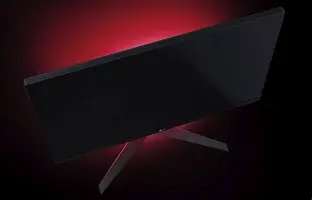
Who should consider it
- People who want a big 32" screen and care about contrast and immersion more than the last millisecond of motion clarity.
- Hobby photographers and video creators who don't need studio-grade color accuracy but appreciate a roomy workspace and accurate-enough colors after calibration.
- Gamers who play a mix of single-player and casual multiplayer and prefer a large, cinematic display.
Who should skip it
- Esports players who need 240Hz+ panels to reach the highest competitive frame rates and the lowest pixel response artifacts.
- Professionals who require perfect HDR and factory-grade color calibration for client work.
- Users who want the latest input connectivity like multiple HDMI 2.1 ports for next-gen console features on every input (variable depending on the exact revision).
Pre-purchase checklist (what I tested and recommend you test)
- Confirm the panel revision and inputs: verify that DisplayPort will give you the full refresh rate at your target resolution.
- Test the unit in person if possible — look for backlight uniformity and any obvious glow/bleed at both high and low brightness.
- Ask about warranty and return policy: used units can be a great value, but ensure you have a return window.
- Plan for calibration: a quick colorimeter pass will make the panel much more useful for editing and content work.
- Check adaptive-sync behavior with your GPU (Nvidia/AMD) and be ready to tweak driver/monitor settings.
Practical tips from my months of ownership
Here are some things I did during my time with the 32Gk850G B that helped improve the experience:
- I set up a color profile after a calibration session. It’s a small time investment that had a big payoff in color consistency.
- I used the monitor’s overdrive presets to find a balance between pixel overdrive artifacts and trailing — the "middle" setting was the sweet spot for most games.
- I kept brightness between 30–50% during the day to reduce eye strain while preserving contrast. At lower brightness you’ll see some glow, so I avoided extremes.
- For console play, I reserved HDMI for casual sessions and used DisplayPort on PC to take advantage of the full refresh rate and adaptive-sync performance.
Conclusion
After several months with the 32Gk850G B, my feeling is that it’s an honest, capable monitor that still has a place in 2026. Its deep contrast, large screen real estate, and solid 144Hz gaming make it a very comfortable daily driver for mixed-use owners like me. There are clear trade-offs when you compare it to contemporary QD-OLEDs or ultra-fast esports displays, but those come with higher price tags or different compromises.
In my experience, if you value immersion, good contrast, and a large workspace without needing bleeding-edge HDR or the absolute fastest refresh rates, the 32Gk850G B remains a practical and satisfying choice. What I found was a dependable monitor that performs well across the range of tasks I throw at it — it won’t wow you with the newest display tech, but it will quietly do almost everything most people need every day.